Taking a newborn outside can feel daunting for new parents. There is a lot of conflicting advice out there, and it is easy to wonder whether fresh air is truly good for such a young baby.
The short answer is yes. Outdoor time offers real, well-documented health benefits for infants. The key is knowing how to do it safely.
Why Fresh Air Matters for Newborns
Newborns spend the majority of their early days indoors. While that is appropriate in the first week or two as they adjust to life outside the womb, staying indoors indefinitely is not ideal for their development.
Regular exposure to fresh air and natural light plays an important role in a newborn’s overall health. It helps regulate their emerging circadian rhythm, supports vitamin D synthesis, and provides sensory stimulation that is simply not available in a controlled indoor environment.
Circadian Rhythm Development
Newborns are not born with an established sleep-wake cycle. Their internal clock takes weeks to develop, and natural light is one of the primary signals that help set it.
Exposure to outdoor daylight, particularly in the morning, helps reinforce the difference between day and night. Im Laufe der Zeit, this can contribute to longer, more predictable nighttime sleep for both baby and parent.
Vitamin D and Bone Health
Vitamin D is essential for calcium absorption and healthy bone development. Deficiency in early infancy has been linked to conditions like rickets, as well as impaired immune function.
Breast milk alone does not supply adequate vitamin D, which is why the American Academy of Pediatrics recommends supplementation for breastfed infants from the first few days of life. Brief, indirect exposure to natural sunlight also supports the body’s ability to produce it, making short outdoor outings a useful complement to supplementation.
Sensory Stimulation
The outdoors offers a richness of sensory input that indoor environments cannot replicate. Wind on the skin, varying light intensities, ambient sounds, and the sight of movement in trees and sky all engage a newborn’s developing nervous system.
This kind of gentle, natural stimulation supports neurological development and can have a calming effect on fussy or overstimulated babies.
How to Take Newborns Outside Safely
Benefits aside, safety is the primary consideration when bringing a young infant outdoors. A few straightforward guidelines make outdoor time both enjoyable and appropriate for newborns.
Wait Until the First Week Has Passed
Most healthcare providers suggest waiting until after the first week before taking a newborn into busy public spaces. jedoch, quiet outdoor settings like your backyard or a nearby park are generally considered safe much sooner, provided the baby is healthy and the weather is suitable.
Always follow the guidance of your paediatrician, particularly if your baby was premature or has any underlying health concerns.
Choose the Right Carrier or Pram
How you transport your newborn outdoors matters as much as where you go. Newborns lack the muscle tone to support their own head, so any carrier or pram you use must provide full head and neck support.
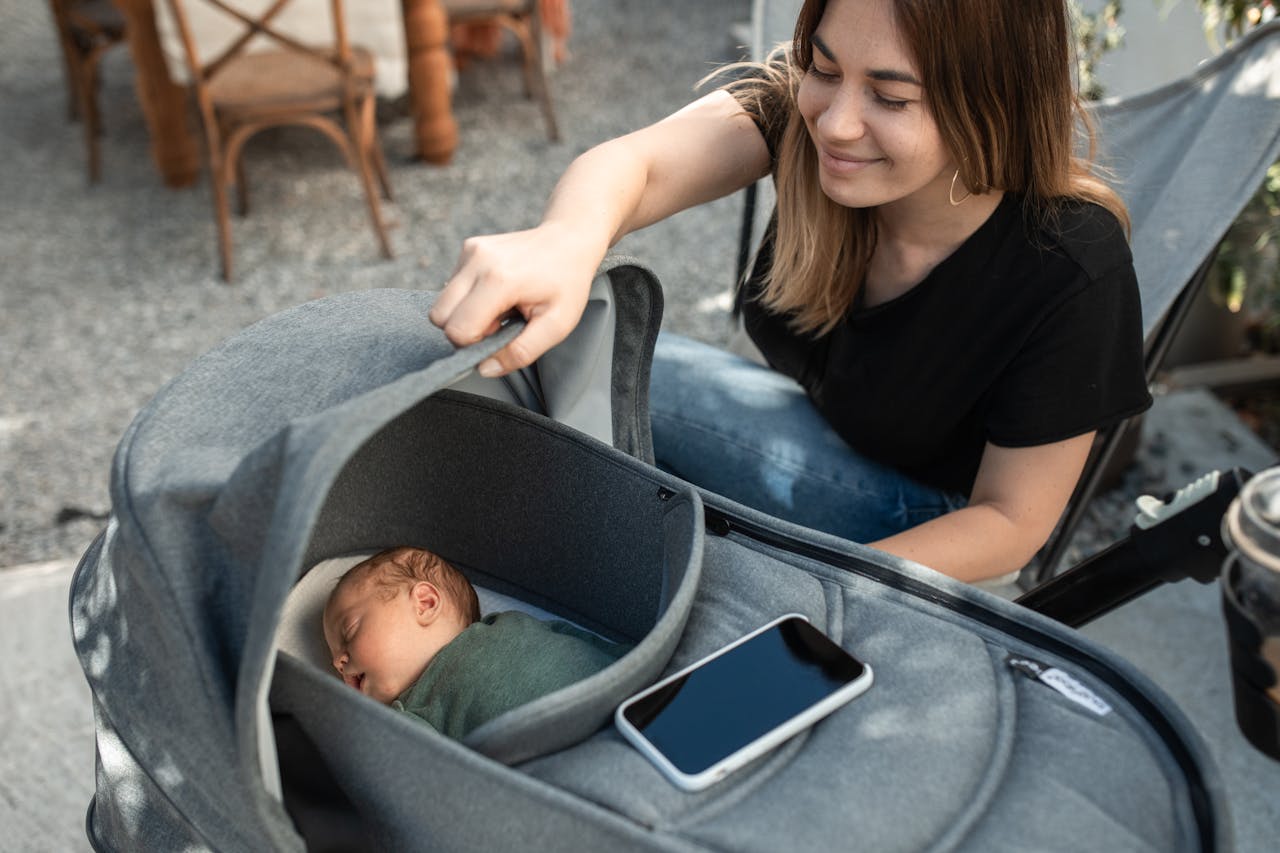
A well-designed bassinet stroller with a lie-flat sleeping position is one of the safest options for very young infants during outdoor walks. Unlike upright or seated strollers, a flat bassinet keeps the baby in the correct spinal position and supports healthy hip and spine development in the early months.
Dress Appropriately for the Weather
Newborns cannot regulate their body temperature the way adults can. They are far more susceptible to both overheating and freezing.
A general guideline is to dress your baby in one more layer than you are wearing. In warm weather, a light hat and breathable clothing are essential. In cooler temperatures, cover their hands, Füße, und Kopf, and use a weather shield or pram cover to block wind and chill.
Avoid Direct Sunlight
While natural light is beneficial, direct sun exposure is not recommended for babies under six months. Their skin contains very little melanin and burns quickly, even on overcast days.
Opt for shaded areas, use a pram canopy, or time your outdoor outings for early morning or late afternoon when UV levels are lower. Never apply sunscreen to babies under six months without consulting a doctor first.
Limit Exposure to Crowds and Illness
A newborn’s immune system is still maturing. Busy public spaces expose them to more bacteria and viruses than their bodies are equipped to handle in the early weeks.
Stick to quieter outdoor environments during the first month. If someone approaches to touch or hold the baby, it is entirely reasonable and appropriate to ask them to wash their hands first.
Signs That Outdoor Time Is Not Going Well
Even with the best precautions, there are times when a baby signals that they have had enough. Knowing what to watch for helps you respond quickly.
Watch for excessive fussiness or crying that does not settle, skin that looks unusually red or pale, a baby who feels very warm or cold to the touch, or any changes in their breathing pattern.
Parents should already be familiar with what normal infant breathing looks like. Our guide on Atemprobleme des Babys covers the key signs to monitor, which is useful context when assessing your baby outdoors.
If any concerns arise, bring the baby indoors promptly and assess whether they need feeding, warmth, or medical attention.
Building a Gentle Outdoor Routine
There is no need to plan elaborate outings. In the early weeks, even ten to fifteen minutes of fresh air can be enough to provide benefit without overwhelming a newborn.
Start with short, calm walks in familiar surroundings. As your baby grows and gains head control, usually around three to four months, you can begin extending the duration and varying the environment.
The goal is to make outdoor time a regular, unhurried part of your baby’s day. Consistency matters more than duration. A daily walk, even a brief one, builds a habit that benefits both infant development and parental wellbeing in equal measure.