Baby Acne Causes, Symptoms & Home Treatment
Contents
What Is Baby Acne?
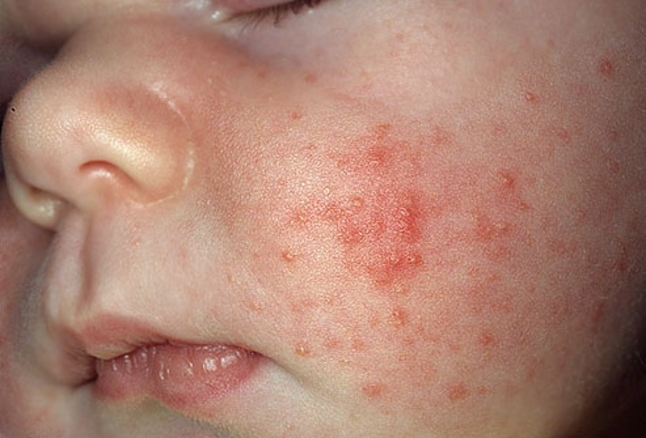
Baby acne is a common, harmless rash of small red or white bumps that appears on a newborn’s face, and sometimes the chest, for a short time. It is also called neonatal acne, and it affects about 1 in 5 healthy newborns.
Neonatal acne appears before 2 months of age. Infantile acne is a separate condition that starts between about 2 months and 1 year, can include blackheads, and may take longer to clear.
Symptoms of the Baby Acne
Baby acne looks like small red bumps or white-topped pimples. Unlike adult acne and infantile acne, newborn acne usually doesn’t have blackheads.
It can show up anywhere on the face, but the cheeks are the most common spot. It may also appear on the neck, chest, or back.
It can be present at birth, but it most often appears around 2 weeks of age.
It doesn’t itch or bother your baby, and it usually clears on its own within a few days to a few weeks, sometimes taking up to a month or longer.
Causes of Baby Acne
The exact cause of baby acne isn’t known. Experts suspect hormones, including hormones passed from the mother before birth, which can make a baby’s oil glands more active.
Babies’ sensitive skin can also react to milk, spit-up, or drool left on the face. Baby acne is not a reason to stop breastfeeding, and it is not a serious condition.
Home Tips for the Treatment of Baby Acne
Baby acne usually needs no medicine. In most cases, you just need to wait for it to clear. These simple steps help keep your baby’s skin clean and comfortable:
1- Cleaning
Gently wash your baby’s face once a day with warm water and pat it dry. You usually don’t need anything but water, though a mild, fragrance-free baby cleanser is fine if your pediatrician agrees. Wipe away milk, spit-up, and drool promptly.
2- Skip the Moisturizer
Lotions, oils, and greasy creams can clog pores and make baby acne worse, so skip them on the affected areas.
3- Avoid the Products
Don’t use adult acne products, such as benzoyl peroxide, retinoids, or medicated washes, on a baby. A baby’s skin is very sensitive. Check with your baby’s doctor before using any product on the rash.
4- Be Patient
Baby acne is harmless. It isn’t itchy or painful. Most cases clear on their own within weeks.
5- Don’t Pinch
Don’t squeeze, pick, or pop the bumps, and don’t scrub the skin. This can irritate the skin, make the rash worse, and raise the risk of infection or marks.
What Are Underlying Conditions In Which Above Home Tips Are Failed To Respond?
Rarely, acne in a baby is a sign of an underlying problem, such as a hormone disorder like congenital adrenal hyperplasia (CAH), a tumor that makes hormones, or another endocrine condition.
This is more of a concern with acne that starts after 2 months or is severe.
If your baby shows other signs of excess male hormones, such as body hair, rapid growth, or genital changes, call your doctor so they can check for an underlying cause.
Also see your baby’s doctor if the acne lasts more than a few weeks or gets worse, if acne appears after 2 months of age, or if your baby has blisters, peeling skin, fever, fussiness, or feeding problems.
For persistent cases, a doctor may prescribe a gentle medicated cream.
Differential Diagnosis
Some conditions look like baby acne but are not. A doctor can tell them apart by looking at the rash and asking about its pattern. Look-alike conditions include:
- Erythema toxicum
- Milia
- Eczema
- Cradle cap (seborrheic dermatitis)
- Heat rash
HP Thoughts: Dealing with acne on your own back? We have an article on that subject: How To Get Rid Of Back Acne At Home.
Sources
- Baby Acne, Cleveland Clinic
- Acne Types, Causes, and Risk Factors, NIAMS (NIH)