Why Investing in Public Health is Critical
Contents
We hear the term ‘public health’ quite often, and most countries will claim that their public health sector is a reliable one. Unfortunately, as has been quite noticeably demonstrated for many years now and perhaps more so than ever during the COVID-19 pandemic, this is not the case.
Goal Of Public Health:
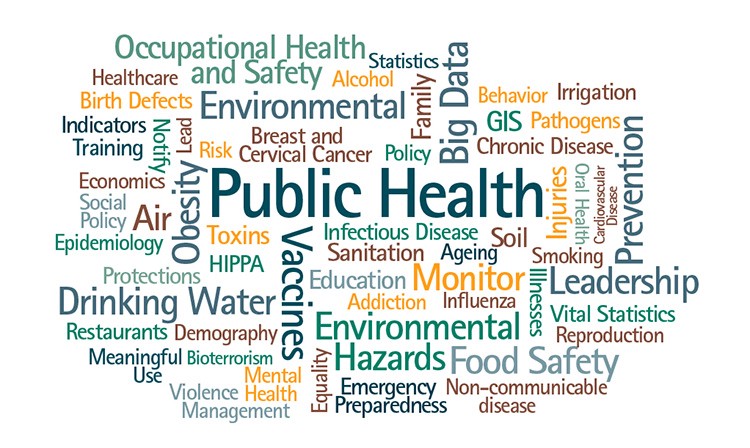
The goal of public health for a country is to protect its people from dangers to their health by addressing modifiable determinants that impact health such as the safety of food and water, the physical environment the population inhabits, and access to necessary medical intervention.
When laid out like this, it would appear that the intentions of public health are to afford the population with the most basic of human rights imaginable. It should be one of the top priorities for government spending.
Lack Of Funding:
While in some places it definitely is, the lack of funding for public health in certain countries is quite alarming and in the face of a crisis, it becomes more and more apparent how urgent a problem the neglect actually is.
It’s no secret that the United States has a troubled approach to public health, at least as it pertains to accessibility of medical intervention in the face of emergencies, serious illnesses or injuries.
What’s interesting (or perhaps horrifying) is the fact that the sector in the USA is not exactly a failure in itself. You could make the case for the country having the most well-trained doctors, innovative medical science and advanced medical technology on the entire planet.
In 2023, about 8 percent of people in the U.S., more than 26 million, had no health insurance. Critics argue this isn’t from a lack of money and resources, but from how coverage is distributed.
Though it technically couldn’t really be described as such, public health in America has effectively become a business. The most advanced medical care is often easiest to reach for those who can afford it.
And with medical insurance in America being outlandishly expensive alongside a large chunk of the population living paycheck to paycheck, the number of people who can actually afford is much lower than it should be.
When you have a country with as much money, technology and resources as the United States, and yet more than 26 million people still lack coverage, something is very, very wrong.
Potential Solution:
So what can be done about this? That’s a difficult thing to answer. One thing is certain, despite the fact that money is being used in such a flippant and unhelpful manner in America, financial support is essential for public health.

One potential solution would be for people to invest their own money into certain companies whose motivations and goals are actually focused on public health. If government spending is going to focus on technology and science and not availability, maybe it’s up to us.
Before I go further, this is a suggestion that has no guarantee of success and maybe it would actually be entirely ineffective, but at this stage, it’s worth the attempt, especially since we’re not exactly stuck for options.
Consider this: There are a number of non-government entities out there who deliberately involve themselves in global health through charitable or philanthropic means and perhaps this is where our focus should lie.
Large philanthropic foundations, such as the Rockefeller Foundation and the W.K. Kellogg Foundation, have long funded health work. They are not in need of financial backing, but their example may have influenced smaller companies to follow a similar approach.
Investing in profitable company can be a solution:
Now, of course, you can invest in large, profitable companies too. Every investment carries risk, but you would still be supporting a force that’s influential in global health, but it would also be worth seeking out other companies who are doing a similar thing.
Find companies that are offering shares and do some research to see if they are in any way involved in offering assistance to public or global health. It is through these companies that your money can help.
Your investment could allow them to grow as a company and be a more substantial force in the enhancement of the health sector. Now, of course, don’t just go throwing away all of your money for the sake of something which may not work.
Do equal amounts of research into the financial health of these potential companies. Maybe see which ones will pay dividends. If you’re not sure what this is, dividends are payments some companies make to shareholders from their profits.
Dividends are not guaranteed. Companies can cut or stop them, and share prices can fall, so consider talking with a licensed financial adviser before investing. I will reiterate once more, this is not a guaranteed solution, but it could be a way of ensuring that there is some funding for public health from some source.
If we can’t rely on our government to take our health seriously, then maybe it is time that we try to take matters into our own hands.
Sources
- Health Insurance Coverage in the United States: 2023, U.S. Census Bureau
- The Goals of Public Health: An Integrated, Multidimensional Model, Public Health Ethics (Oxford Academic)