All About Itchy Eyes: Causes, Treatment and Prevention
Contents
Introduction
Nearly everyone gets itchy eyes now and then. There are many possible causes, and the itch often comes with irritated eyelids, especially at the base of the eyelashes, along with bloodshot eyes or swollen eyelids.
In the inner corner of each eye, nearest your nose, are small tear drainage openings. One is in the upper eyelid and one is in the lower eyelid.
These openings, called the puncta, let extra tears drain from the surface of the eye into the nose.
This is why your nose often runs when you cry. Allergies, infections, and several other causes can trigger ocular pruritus, the medical term for itchy eyes. Telling an allergy apart from an infection matters, so you don’t choose a treatment that makes things worse.
Causes of Itchy Eyes
If your eyelids are red and inflamed, you may have blepharitis. It is often linked to bacteria on the eyelids and sometimes to tiny mites that live on the lashes.
If you wear contact lenses, itchy eyes can make them very uncomfortable. Wearing contacts too long or not replacing them as often as directed can also cause itchy eyes. Other causes include the following:
1- Infection
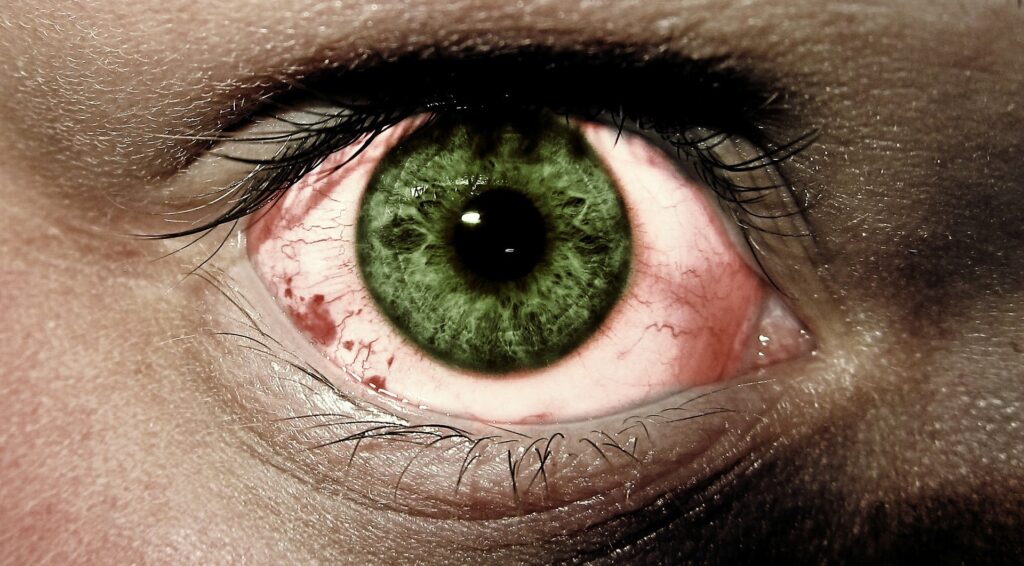
Your eyes can be affected by viral, bacterial, and other infections, and many of them cause itching. One of the more common eye diseases is conjunctivitis, also known as pink eye because the white of the eye turns pink.
Viral and bacterial pink eye spread easily from person to person and often cause discharge from the affected eye. Antibiotic drops help only bacterial pink eye; viral pink eye often clears on its own in 7 to 10 days.
Another cause of red, painful eyes is uveitis, an inflammation inside the eye that affects the uvea, the eye’s middle layer, which includes the iris. Uveitis is often linked to autoimmune diseases, though infections can also cause it.
Uveitis can cause eye pain, blurry vision, floaters, and strong sensitivity to light. Both pink eye and uveitis should be checked by a doctor, especially if you have pain or vision changes.
Uveitis is usually treated with prescription steroid eye drops. In more severe cases, steroid pills or injections, or medicines that calm the immune system, may be needed.
Untreated uveitis can lead to vision loss. Long-term steroid use can raise the risk of glaucoma and cataracts, so regular eye exams are important.
2- Eye fatigue
Staring at a computer screen for a long time, or trying to read in dim light, can strain your eyes and leave them feeling itchy and tired.
Eye strain can also develop when you force yourself to stay awake and keep your eyes open while you are worn out.
For some people, indoor heating or air conditioning leads to strained, itchy, irritated eyes. The best treatment is simply to rest your eyes regularly.
If driving is straining your eyes, pull over somewhere safe and rest them. Take a break or switch drivers so your eyes get relief from long stretches of highway and oncoming headlights.
3- Perennial allergies
Unlike seasonal allergies, perennial allergies can bother you all year. Mold, dust mites, and pet dander are among the most common year-round eye allergens.
You may also be sensitive to certain products in your home, and the contact lens solution you use could be irritating your eyes.
Your soap or shampoo might also be the problem. If you have ruled out environmental allergens, try taking a break from one product that comes into contact with your eyes at a time.
It can take a while to find the culprit, but it is usually worth the effort.
To find out what you are allergic to, an allergist can do skin testing.
Tiny amounts of allergens, such as ragweed or pet dander, are placed on or just under the skin to see whether the skin reacts. These tests are safe for most children and adults.
Along with limiting your exposure to an allergen, medicines such as antihistamines or corticosteroids can help reduce itching. Ask your doctor before using steroid eye drops.
4- Dry eye
Tears, which are a mix of water, oil, and mucus, keep your eyes moist and comfortable. For various reasons, your eyes may stop making enough tears, leaving them dry and itchy.
Age is a common reason: dry eye is more common after age 50 and in women. Autoimmune conditions such as Sjögren syndrome, lupus, and rheumatoid arthritis can also reduce tears.
Some medicines list dry eyes as a possible side effect. These can include:
- Antidepressants
- Medicines that lower blood pressure
- Birth control pills
- Decongestants
Your eyes can also dry out because tears evaporate too quickly. Wind, smoke, air conditioning, and dry indoor air can all leave your eyes drier and itchier. Sometimes a blocked tear duct or gland is the cause.
Treating dry eyes may be as simple as using over-the-counter artificial tears. Follow the directions carefully. If you have frequent dry eyes, see an eye doctor, who may prescribe medicated drops.
Treatment of Itchy Eyes
The best treatments for itchy eyes are those that address the cause. For example, if your symptoms come from dry eye, allergy drops will help you less than they would help someone with seasonal allergies.
That is why talking with your eye doctor is the best way to find the right treatment.
Several kinds of medicine can relieve itchy eyes, but only your doctor can tell which treatment or combination fits your needs. Sometimes artificial tears or allergy drops are enough.
In other cases, you may need an antibiotic, an anti-inflammatory medicine, or special eyelid cleansers. A clean, cool, damp washcloth placed over your closed eyes may also ease the itching.
Avoid rubbing your eyes, which can make itching and irritation worse. See a doctor right away if you have eye pain, light sensitivity, or blurry vision that doesn’t clear when you blink.
Sources
- Dry Eye, National Eye Institute
- Pink Eye, National Eye Institute
- Uveitis, National Eye Institute
- Allergic conjunctivitis, MedlinePlus