
What Are Back Dimples? Myths And Facts

Contents
All of you know very well about the dimples. It is the indentations on the cheeks. Similarly, back dimples are the indentations on your back just above your butt. These are also called dimples of venus and they are known as features of beauty.
Overview
Back dimples are indentations just above the butts. This indentation is over the joint where the pelvis and spine meet, just above the buttocks. They are more often noticed in women, but men can have them too.
Back dimples are also known as dimples of venus. This name is taken from Venus which is the Roman goddess of beauty. It is also accepted by the medical community.
Back dimples are created by short ligaments that connect the skin to the pelvic bones. There are no muscles in this area to tone, so exercise cannot create them.
Losing body fat may make existing dimples easier to see, but it cannot create new ones.
If You Don’t Have Back Dimples:
If you don’t have back dimples and want to create dimples on your back right above your butt, there is a method known as back piercing. This method doesn’t create real dimples; it places jewelry where back dimples would sit.
A needle or scalpel is inserted in the middle layer of the skin named the dermis to make a pocket. Using forceps, the piercer will insert an anchor with a post into the pocket. Finally, they’ll screw the jewelry “top” onto the post.
Like any piercing, a dermal piercing can get infected or be rejected by the body, so choose a licensed piercer.
Who Do Have Back Dimples?
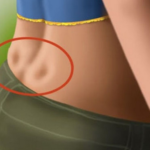
Back dimples are more often noticed in women, but men can have them too. They are present from birth. Genes may play a role, but this hasn’t been proven.
Two Back Dimples And One Back Dimple
Back dimples come as a pair just above the buttocks. A single dimple lower down, just above the crease of the buttocks, is different. It is called a sacral dimple, and it is present at birth.
Both are usually harmless. Sometimes, though, a sacral dimple is a sign of an underlying spinal problem, such as:
- Spina bifida occulta, a mild form of spina bifida. In spina bifida occulta, the spine does not close completely, but the spinal cord still stays within the spinal canal. It usually does not cause any symptoms.
- Tethered spinal cord, which happens when the spinal cord attaches abnormally to the wall of the spinal canal. This limits the cord’s movement and can cause leg weakness and numbness, as well as bladder or bowel incontinence.
The risk of these spinal problems is higher when any of the following appear near a sacral dimple at birth:
- a tuft of hair
- skin tag
- skin discoloration
- bruising
Most sacral dimples need no treatment. If a doctor sees warning signs, they may order an ultrasound or MRI to check the spine.
Facts And Myths
There are many myths linking back dimples to a better sex life.
It is a myth that women who have back dimples can orgasm more easily because back dimples are a sign of good circulation in the pelvic region.
There is another myth that women can orgasm just from having a partner push on the dimples. But the fact is that there is no evidence of these claims.
Back dimples occur because of ligaments that attach bone to the skin and they have nothing to do with blood circulation in the area.
In folklore, these dimples were said to signal beauty, luck and even fertility. Cleveland Clinic notes there’s no scientific evidence for those beliefs.
Conclusion
Back dimples are harmless indentations, present from birth, just above the buttocks. A single sacral dimple can sometimes signal a spinal problem. If a doctor sees warning signs at birth, they may order an ultrasound or MRI.
Otherwise, back dimples are simply a normal body feature.
If you want the look without natural dimples, a dermal piercing is one option. Talk with a licensed piercer about the risks first.
Sources
- Sacral Dimple (Back Dimples), Cleveland Clinic
- Spina Bifida, MedlinePlus