
Baby with Low Blood Sugar: Causes, Signs and Treatment
Contents
- OVERVIEW
- Causes of Baby with Low Blood Sugar
- Why Does This Condition Happen?
- Signs and Symptoms of Baby with Low Blood Sugar
- How The Condition Can Be Diagnosed Early?
- Blood glucose levels:
- Complete blood count:
- What Are The Complications?
- How to Treat Baby with Low Blood Sugar?
- Extra feeding
- Oral glucose gel
- Intravenous (IV) glucose
- Medicines for persistent cases:
- Surgical options:
- What Is Prognosis Of Baby With Low Blood Sugar?
- When to Seek Medical Help?
- Sources
OVERVIEW
Low blood sugar in a newborn, called neonatal hypoglycemia, means the baby’s blood glucose level is too low for their age, or low enough to cause symptoms.
Doctors use age-based target ranges, since a baby’s blood sugar normally dips in the first hours after birth and then rises. Expert guidelines don’t agree on one exact cutoff, so care teams follow their hospital’s protocol.
Many things can lead to low blood sugar in a newborn, such as infection, problems at birth, or a mother with diabetic blood sugar levels during pregnancy.
Low blood sugar that causes symptoms occurs in about 1 to 3 of every 1,000 births, and it is more common in babies with risk factors.
Causes of Baby with Low Blood Sugar
Low blood sugar can happen when a baby makes too much insulin, can’t make enough glucose, uses glucose too fast, or doesn’t get enough through feeding. Causes and risk factors include:
- Low sugar stores
- Being born early (premature)
- Being born late (post-term)
- Slow growth in the womb, or being small for gestational age
- Not getting enough calories
- Feeding problems
- Using glucose faster than usual
- A mother with diabetes
- Erythroblastosis fetalis (a blood condition from mismatched blood types)
- Beckwith-Wiedemann syndrome
- Other causes
- Infection
- Sepsis
- Low body temperature
- Polycythemia (too many red blood cells)
- Needing oxygen or resuscitation after delivery
- Glycogen storage diseases
- A mother who took certain medicines, such as beta-blockers like propranolol (Inderal)
- Galactosemia
- Being large for gestational age
Why Does This Condition Happen?
Before birth, glucose passes from the mother to the baby through the placenta, so the baby’s blood sugar follows the mother’s. When the umbilical cord is cut, that supply stops.
A newborn’s blood sugar normally falls in the first hours of life, then rises as the baby’s body starts making its own glucose and feeding begins. Early and frequent feeding helps keep blood sugar steady.
Babies of mothers with diabetes are at special risk. They may make extra insulin after birth, which can push their blood sugar down quickly.
Signs and Symptoms of Baby with Low Blood Sugar
Symptoms usually appear within hours to the first few days after birth. Some babies, especially those at high risk, have low blood sugar with no symptoms at all. That is why at-risk babies are checked with blood tests.
Symptoms can be vague and can also be caused by other newborn problems. Possible signs include:
- Bluish or pale skin
- Tremors or jitteriness
- Floppy muscles
- Seizures
- Breathing problems, such as pauses in breathing, rapid breathing, or grunting
- Poor feeding or vomiting
- Sleepiness or listlessness
- Irritability or a high-pitched cry
- Sweating
- Trouble staying warm (low body temperature)
- Rolling up of the eyes
- In severe cases, heart problems
How The Condition Can Be Diagnosed Early?
Blood glucose levels:
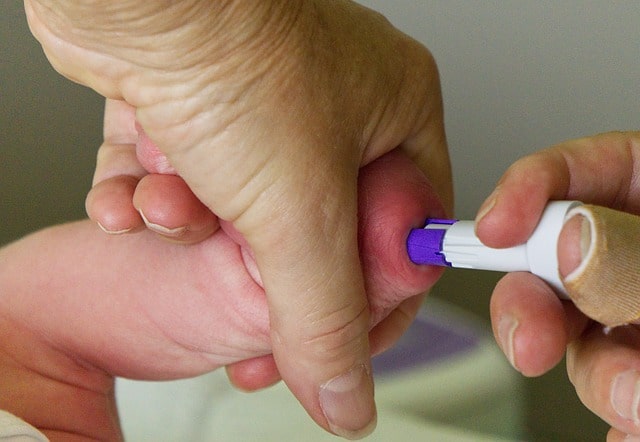
Babies at risk have their blood sugar checked with a heel-stick blood test in the first hours after birth. Bedside meters give a quick reading, and a lab test may be used to confirm a low result.
Tests are repeated over the first day or longer, until the baby’s levels stay normal for about 12 to 24 hours.
Complete blood count:
A complete blood count (CBC), including a white blood cell differential, can help check for infection or sepsis, which can cause low blood sugar.
Other tests, such as newborn metabolic screening, may be done to look for rarer causes.
What Are The Complications?
Most babies whose low blood sugar is found and treated early do well. Severe or long-lasting low blood sugar can cause complications such as:
- Brain injury that can affect development
- Seizures
- Pauses in breathing (apnea)
- Rarely, heart failure
- Death in very severe, untreated cases
How to Treat Baby with Low Blood Sugar?
Treatment happens in the hospital and is guided by the baby’s care team. Planning ahead for babies at high risk is an important part of care. Treatment may include:
Extra feeding
Extra feeds of breast milk or formula are often the first step. Hand expression and breast massage can help boost milk supply.
Oral glucose gel
A sugar gel rubbed inside the baby’s cheek may be used for a short time, along with feeding.
Intravenous (IV) glucose
If the baby can’t feed, doesn’t improve with feeding, or has very low levels, a glucose solution is given through a vein. Treatment continues until the baby can keep normal levels on their own, which may take hours or days.
Medicines for persistent cases:
In rare cases where low blood sugar keeps coming back, specialists may use medicines such as glucagon, diazoxide, or steroids like hydrocortisone or Prednisolone. Doses are set by the medical team; these are never given at home without a doctor’s direction.
Surgical options:
If a rare insulin-producing tumor or overactive pancreas tissue is the cause, surgery may be considered.
What Is Prognosis Of Baby With Low Blood Sugar?
The outlook is good for babies who have no symptoms or who respond well to treatment. Blood sugar can drop again after treatment, so babies are monitored afterward.
Severe or prolonged low blood sugar, or low blood sugar with seizures, is more likely to affect brain development. This is why early checks and treatment matter.
When to Seek Medical Help?
Call 911 or go to the emergency room if your baby has a seizure, turns blue or very pale, has pauses in breathing, or is hard to wake.
Call your baby’s doctor right away if your newborn is feeding poorly, is unusually sleepy or limp, is jittery, or seems cold. Quick treatment protects your baby’s health.
HP Thoughts: What you feed your baby matters as they grow. Learn why one popular product may not be the best everyday choice in our post: Baby Food Pouches.
Sources
- Neonatal hypoglycemia, MedlinePlus
- Exploring the long-term impacts of neonatal hypoglycemia to determine a safe threshold for glucose concentrations, European Journal of Pediatrics (PMC)