Tracheal Shave: Procedure, Cost, Recovery & Side Effects
Contents
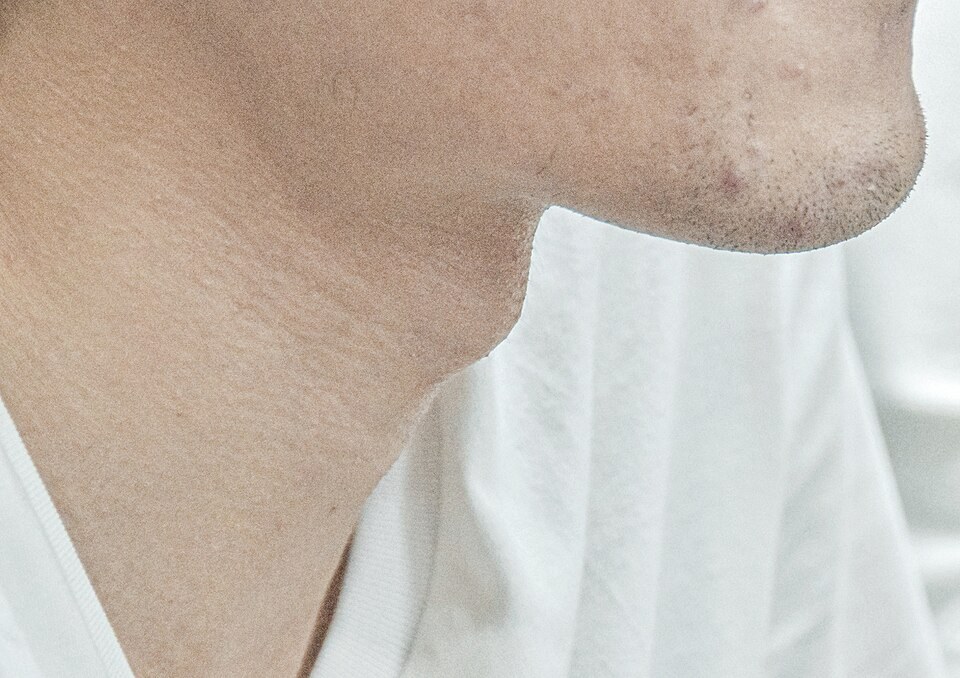
Photo by TONY LU, CC BY-SA 4.0, via Wikimedia Commons
A tracheal shave (Adam’s apple reduction surgery) is often done as part of facial feminization. It makes the front of the neck look smoother and less prominent.
It is most often chosen by trans women and nonbinary people. Some cisgender women with a visible Adam’s apple choose it too.
Tracheal Shave
The tracheal shave is also known as chondrolaryngoplasty or thyroid cartilage reduction. The name is a little misleading, because the surgery works on the thyroid cartilage of the voice box, not the trachea.
The surgeon reduces the size of the cartilage by shaving it down through a small incision in the neck. The thyroid cartilage helps protect the vocal cords.
A large Adam’s apple is a male secondary sex characteristic. For many people transitioning from male to female, reducing it is an important part of feeling at home in their body.
Why Is a Tracheal Shave Done?
Everyone has thyroid cartilage around the voice box. During puberty, rising testosterone makes this cartilage grow in people assigned male at birth (AMAB). The larynx gets larger and the voice gets deeper.
A visible bump is seen as a masculine trait. That is why many AMAB trans patients choose a tracheal shave, often together with other facial feminization procedures.
Procedure Of Tracheal Shave:
It is usually an outpatient procedure. Many surgeons use general anesthesia, and some offer it under local anesthesia in suitable patients.
The tracheal shave can be done at the same time as other facial feminization surgical procedures**(e.g. jaw reduction, forehead reduction, rhinoplasty, etc.)**. In that case, you will be under general anesthesia for the whole operation.
Surgeons often place a small incision of about 2 cm in a natural skin crease under the chin or high in the neck, so the scar is less visible than one directly over the bump. In general, the surgeon will:
- move aside the tissues in front of the thyroid cartilage and shave down its most prominent part, leaving enough cartilage to protect the vocal cords;
- close the incision over the now smaller Adam’s apple.
In one published series of 31 patients, the surgeon used a camera to locate the vocal cords and left at least 2 mm of cartilage above them to protect the voice.
Aftercare:
- After surgery, you will be watched in a recovery room for a few hours before going home.
- Some patients, especially those having several procedures, stay overnight in the hospital.
- Rest for a day or two.
- Avoid strenuous activity and singing or speaking loudly until your surgeon says it is safe.
How Much Does It Cost?
Costs vary widely by surgeon, location and whether it is combined with other procedures. Ask for a written quote that includes the surgeon, anesthesia and facility fees.
Insurance coverage for gender-affirming facial surgery varies by plan and state. If your claim is denied, you can appeal, and LGBTQ+ legal organizations may help you find free or low-cost legal advice.
Recovery:
Most people have a sore throat and some pain when swallowing for the first few days. Rest your voice and eat soft foods or liquids if swallowing hurts.
Follow your surgeon’s instructions on wound care and when to return to work and exercise.
Side Effects
It includes:
- mild pain
- swelling
- bruising
- sore throat
- a hoarse or weak voice
- difficulty or pain when swallowing
A systematic review of chondrolaryngoplasty found hoarseness in about 36% of patients and painful swallowing in about 20%. Of those with hoarseness, 96% recovered within 20 days.
Potential Risks
Risks include those of anesthesia and of the surgery itself:
- Postoperative delirium and breathing problems
- Removal of too much thyroid cartilage, which can affect the voice
- A noticeable scar
HP Thoughts: Curious about other cosmetic procedures? Read our guide to Butt Implants.
Conclusion:
The tracheal shave is a type of facial feminization surgery that is used to reduce the size of the Adam’s apple. It may be done on trans women, nonbinary people, and cisgender women.
Choose an experienced, board-certified surgeon to lower the risk of voice problems or scarring.
Sources
- Esthetic reduction of the thyroid cartilage: A systematic review of chondrolaryngoplasty, PMC
- Chondrolaryngoplasty Under General Anesthesia Using a Flexible Fiberoptic Laryngoscope and Laryngeal Mask Airway, Archives of Otolaryngology–Head & Neck Surgery